 how-to
How to Manage Your Wedding Day Timeline Stress-Free
Last Updated: November 1, 2026
Quick Summary
To manage your wedding day timeline, build it backward from your ceremony start time, assigning realistic durations to each block and adding buffer time before the ceremony and dinner. Share the draft with every vendor for corrections, then send the final version one to two weeks out.
- A wedding photography timeline needs 30 to 60 minutes for couple portraits and 20 to 30 minutes each for wedding party and family photos.
- Name one point person who holds the run of show and has authority to make small calls on the day.
- If a delay is under 15 minutes, absorb it with your built-in buffer and make no schedule changes.
- When trimming, cut extended family photo groupings and parent dances before cutting dancing.
- Print the master timeline for your point person and DJ, and confirm receipt from every vendor at least one week out.
Table of Contents
- Why a Wedding Day Timeline Is Your Most Important Planning Tool
- Step-by-Step: How to Build a Wedding Day Timeline Template
- Wedding Photography Timeline: How Much Time to Allocate for Photos
- Wedding Reception Timeline Examples for Different Styles
- Wedding DJ and Photographer Coordination: The Handoff That Makes or Breaks the Schedule
- Contingency Planning: How to Handle Delays, Weather, and Last-Minute Changes
- Build Your Timeline With One Team Behind It
- Frequently Asked Questions
Why a Wedding Day Timeline Is Your Most Important Planning Tool
A wedding day timeline is a written plan that assigns a start time to every part of your day, from hair and makeup to the last dance.
Your timeline is not a wish list. It is a budget of minutes, and every minute spent in one place is a minute you cannot spend somewhere else.
The Cost of a Missing Schedule
Without a schedule, small delays snowball. Hair and makeup runs 20 minutes long. Photos start late. Dinner gets pushed. Guests sit hungry while the DJ stalls.
The fix: write the day down, share it early, and give one person the authority to keep it moving.
Step-by-Step: How to Build a Wedding Day Timeline Template
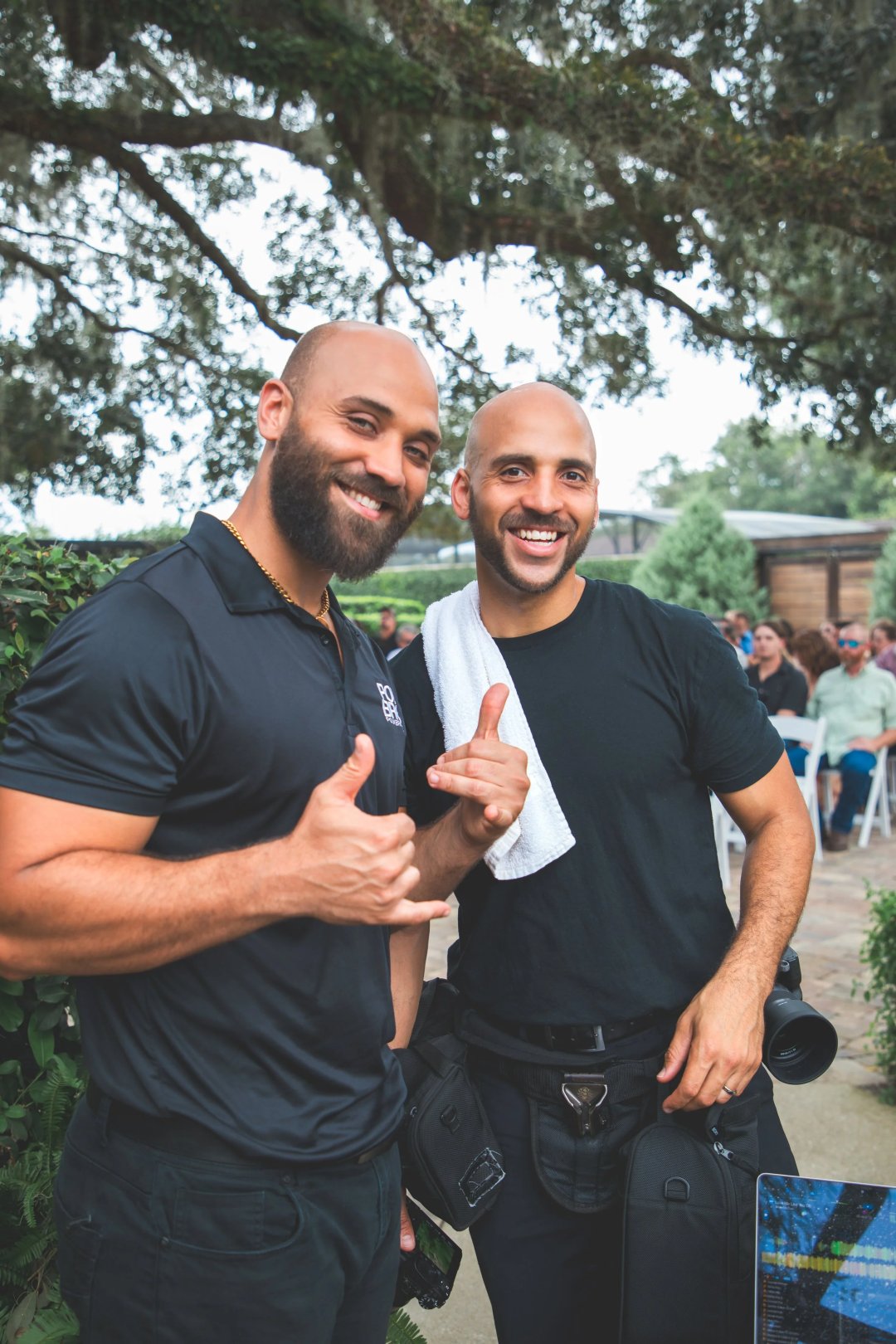
Follow these steps in order. A wedding day timeline template works best when you fill it in from the end of the day backward, not from the morning forward.
- Confirm your ceremony start time and venue access time.
- List every event you want: first look, portraits, cocktail hour, dinner, toasts, first dance.
- Assign a realistic duration to each item.
- Add travel time between every location.
- Work backward from the ceremony to set the getting-ready start.
- Add buffer time before the ceremony and before dinner.
- Share the draft with every vendor and ask for corrections.
- Finalize and send the finished version one to two weeks out.
Work Backward From Your Ceremony Start Time
Your ceremony time anchors everything. If your ceremony starts at 4:00 p.m., your guests need to be seated by 3:50.
That means your venue needs to be ready, your wedding party lined up, and your officiant in place before then.
This is the biggest mistake we see: couples build the morning first and hope the afternoon fits.
Block Out Getting-Ready, Photos, and Reception Windows
- Getting ready: hair and makeup slots for each person, plus dressing time
- Photos: first look, couple portraits, wedding party, family photos
- Ceremony: guest arrival, processional, ceremony, recessional
Write down a start and end time for each block. If two blocks overlap, you have a problem to solve now, not on the wedding day.
Wedding Photography Timeline: How Much Time to Allocate for Photos
A wedding photography timeline needs 30 to 60 minutes for couple portraits, 20 to 30 minutes for wedding party photos, and 20 to 30 minutes for family photos.
Most couples underestimate how long photos take. Groups are large, people wander off, and someone always needs a touch-up.
First Look, Couple Portraits, and Family Photos
A first look can free up your entire cocktail hour. If you are still deciding, see our post on whether a first look fits your day.
Family photos are the other big time eater.
Here is how much time to block out for each part of your wedding photography timeline.
| Photo block | Time to allocate | Note |
|---|---|---|
| Couple portraits | 30 to 60 minutes | Add a first look to finish before the ceremony |
| Wedding party photos | 20 to 30 minutes | Groups are large and people wander off |
| Family photos | 20 to 30 minutes | Give photographer a written grouping list |
| Large family groups | Extra time | A big group photo takes longer than a small one |
| Family photo rounding | Saves 15 minutes or more | Ask a family member to round people up |
Wedding Reception Timeline Examples for Different Styles
Reception flow depends on your style, but a style label alone does not help you assign minutes. Below are three reception templates with actual clock times, built on a 4:00 p.m. ceremony and a 5:00 p.m. cocktail hour. Shift every time by the same offset to match your own ceremony.
Traditional Seated Reception (4-Hour Reception, 5:00-9:00 p.m.)
- 5:00-6:00, Cocktail hour; guests mingle while you finish portraits
- 6:00-6:10, Grand entrance and welcome toast
- 6:10-6:20, First dance
This is the most schedule-sensitive format. Every formal moment stacks in the first 90 minutes of the reception, so a 15-minute dinner delay pushes the entire back half. Build a 10-minute buffer between dinner and toasts.
Relaxed Cocktail-Style Reception (3-Hour Reception, 5:00-8:00 p.m.)
- 5:00-6:15, Cocktail hour flows directly into reception; food stations open, no seated dinner
- 6:15-6:20, Short welcome toast from the couple
- 6:20-6:30, First dance (optional; some couples skip it entirely)
This format has almost no hard transitions, which makes it forgiving of delays but harder to keep guests engaged if your crowd is not a dancing crowd. If your guest list skews older or more conversational, add a seated area and a scheduled dessert moment at 7:00 to give the room a focal point.
Dinner-Heavy Reception (4.5-Hour Reception, 5:00-9:30 p.m.)
- 5:00-6:00, Cocktail hour
- 6:00-6:10, Grand entrance
- 6:10-6:20, Welcome toast and first dance
Spreading formalities between courses keeps guests from sitting through a 20-minute block of speeches on an empty stomach. The trade-off is that your DJ and photographer need a course-by-course cue sheet, not a single reception start time.
Check Availability & Request Pricing →
How to Pick and Adapt a Template
Match the template to your crowd, not to a Pinterest board. A dancing crowd wants the floor open by 7:30; a talkative crowd is fine with a longer dinner and later dancing. Once you pick a format, hand the clock times to your DJ, caterer, and photographer and ask each to flag conflicts.
Wedding DJ and Photographer Coordination: The Handoff That Makes or Breaks the Schedule
Wedding DJ and photographer coordination is the most overlooked part of the schedule.
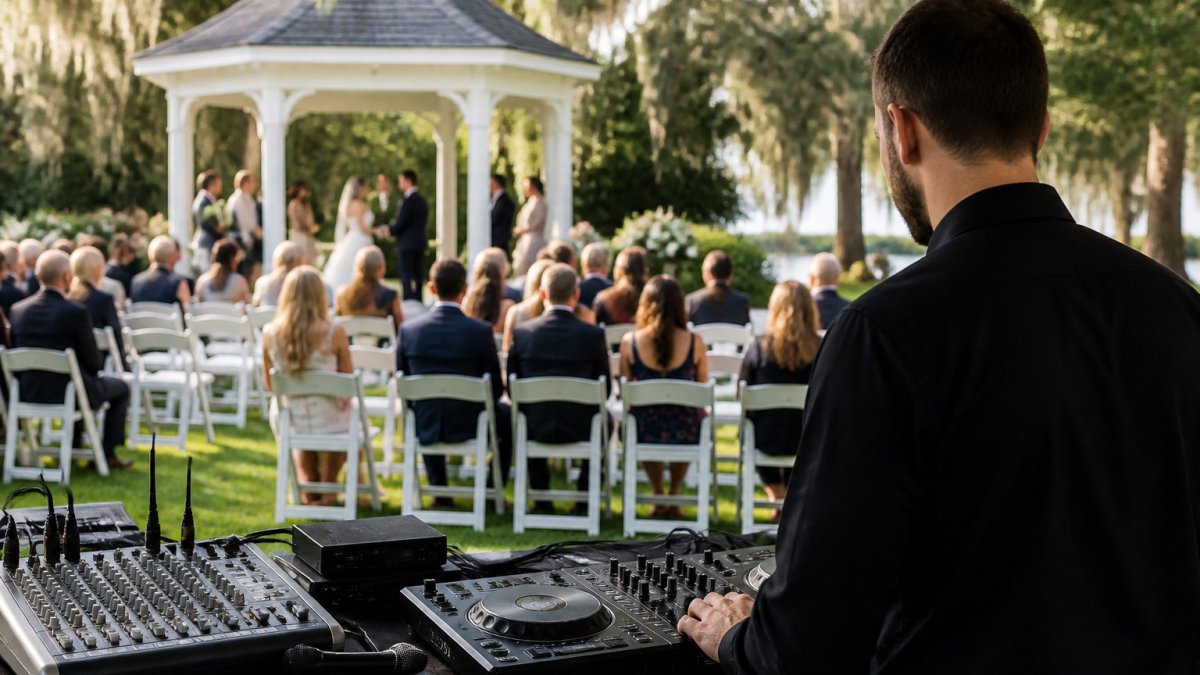
Your DJ announces the toasts. Your photographer needs to be in place before that announcement. If they have never spoken, moments get missed.
Booking one team for both jobs can simplify that handoff. Entertainment offers combined packages that include photography, videography, and DJ services, so the coordination happens within one team.
Assign One Point Person and Share the Run of Show
Name one person to hold the run of show on the wedding day. This is often a planner, a trusted friend, or a family member.
Then share the schedule with everyone:
- Your DJ, photographer, and videographer
- Your caterer and venue contact
- Your wedding party
Clear communication beats a perfect plan. A simple schedule everyone understands will outperform a detailed one nobody reads.
Contingency Planning: How to Handle Delays, Weather, and Last-Minute Changes
Adding buffer time helps, but a contingency plan should also say who decides what, when, and in what order when the day slips. Here is one decision tree you can use.
The Delay Decision Tree
When something runs late, work through these questions in order. The first 'yes' determines the move.
- Is the delay under 15 minutes? Absorb it with your built-in buffer. No changes to the schedule. Most small hiccups die here.
- Is the delay 15-30 minutes and before the ceremony? Shorten the pre-ceremony photo block, not the ceremony. Cut group photos from the pre-ceremony list and move them to cocktail hour.
- Is the delay 15-30 minutes during the reception? Compress dinner pacing with your caterer before you cut dancing. Ask whether courses can be plated faster or dessert can be passed instead of served.
- Is the delay over 30 minutes at any point? Your point person calls a five-minute huddle with the DJ, photographer, caterer, and venue contact. Pick one thing to cut, not three things to rush. Rushing three segments creates three problems.
What to Cut First, and What Never to Cut
When you have to trim, cut in this order: extended family photo groupings, parent dances, a scheduled bouquet toss, and any programmed entertainment segment that is not central to your day. Prioritizing these core moments becomes even more critical when you are balancing the complexities of a multi-day wedding schedule.
Weather: Decide Before the Week Of
Central Florida afternoons can turn quickly, so set your rain call deadline in advance. A common pattern is to make the indoor-versus-outdoor call two hours before the ceremony, with the venue contact and your photographer on the decision. For more on rain, see what to do if it rains on your wedding day.
Late Vendors and Equipment Failure
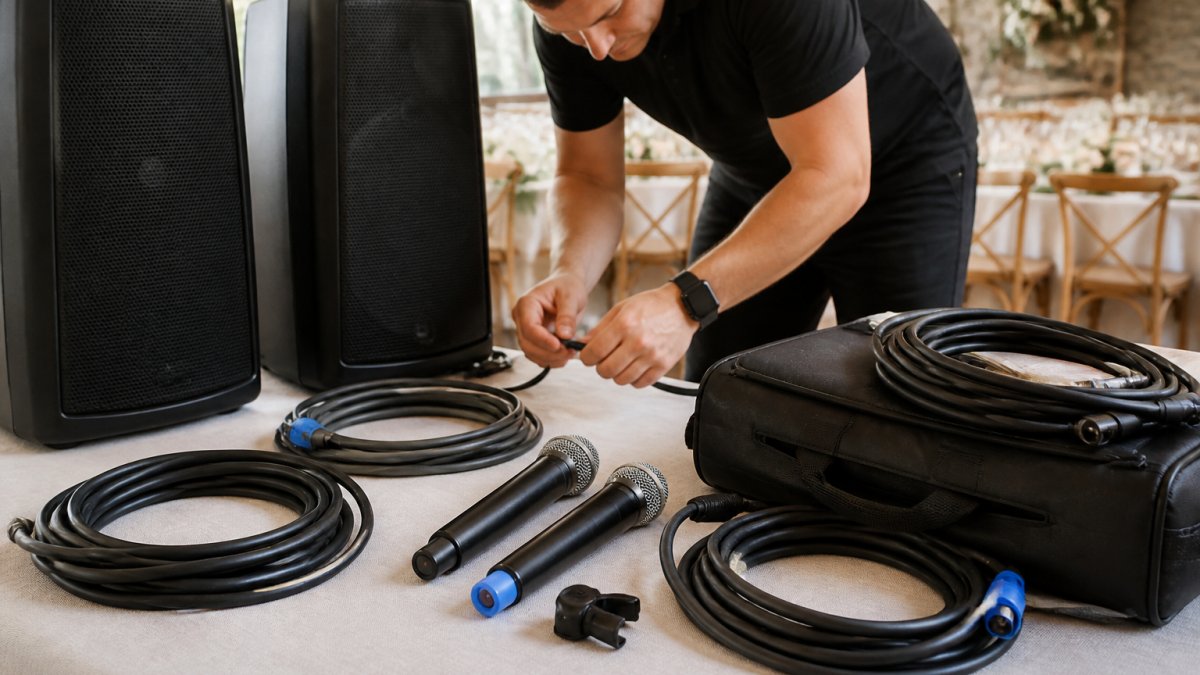
Ask every vendor, in writing, before the wedding: what is your backup if you cannot perform, and who do I call? For entertainment specifically, confirm whether backup equipment and a backup MC are part of the agreement. Our guide to a wedding entertainment backup plan covers what to ask about those terms.
Version Control and the Distribution Checklist
Keep exactly one master timeline. Name it with a date (for example, 'Master Timeline v3, Final'), and when you update it, resend it to everyone on the list below with the version number in the subject line. Never let two versions circulate.
- Your DJ, photographer, and videographer
- Your caterer and venue contact
- Your wedding party
Build Your Timeline With One Team Behind It
A wedding day timeline is only as strong as the people running it.
At PolkBros, we have spent over 30 years helping couples across Orlando, Sanford, Daytona Beach, and the surrounding communities stay on schedule.
Want help building a timeline that actually works? Check availability and request pricing with our team, and we will walk through your day together.
Frequently Asked Questions
How much buffer time should a wedding day timeline include?
Build in 10 to 15 minutes of buffer between major events like the ceremony, cocktail hour, and reception entrance. For travel between venues, add 15 to 20 minutes beyond the GPS estimate. These small cushions absorb unexpected delays without forcing you to cut reception time. If your ceremony starts late, the buffer lets your photographer and DJ adjust without stress.
When should the DJ and photographer coordinate on the wedding day?
They should connect at least one week before the wedding to review the run of show and confirm key moments like the first dance, toasts, and cake cutting. On the day itself, a brief check-in during setup ensures both are aligned on timing.
What should I do if the wedding day timeline falls behind?
First, don't panic. Most delays are minor and can be absorbed by buffer time. Your point person should alert the DJ and photographer immediately so they can adjust. Prioritize must-have moments like the first dance and toasts, and consider trimming open dancing or photo time if needed. A flexible schedule with built-in cushions makes recovery much easier.
How much time should I allow for wedding photos?
Plan for 30 to 45 minutes for couple portraits, 20 to 30 minutes for family photos, and 15 to 20 minutes for wedding party shots. A first look adds flexibility by freeing up cocktail hour for couple portraits. If you're working with a wedding photography timeline, share your shot list in advance so your photographer can keep things moving.